Source Mining Machinery Dumbbell Pin for Transport, Fitness, Gym
Compare 30 mining machinery dumbbell pin options from verified suppliers. Buyers can evaluate specifications like weight, dimensions, and material for applications in mining transport, fitness equipment, and gym storage solutions; compare the available evidence and request quotations based on your requirements.
Key considerations
Products List


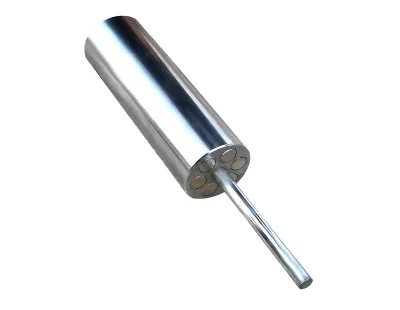



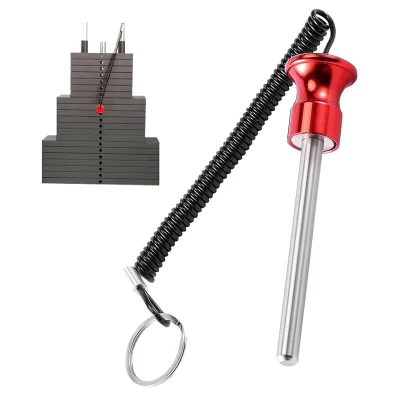



Comprehensive Sourcing Guide
Mining Machinery Dumbbell Pin Sourcing Guide
Dumbbell pins used in mining machinery—primarily as connector pins, securing pins, and scraper chain fasteners on armored face conveyors (AFCs) and chain conveyor systems—occupy a narrow but demanding procurement niche. Buyers sourcing these components must reconcile heavy-duty mechanical performance with traceable manufacturing quality, since pin failure in an underground transport chain can halt production across an entire working face. The listings observed in this category range from conveyor pin assemblies to fitness equipment dumbbell rack pins, so the first procurement decision is confirming that a listing genuinely belongs to the mining transport category rather than an unrelated product sharing the keyword.
This guide walks through the full evaluation sequence: scoping the product category, verifying technical specifications, confirming compliance documentation, understanding cost drivers, qualifying suppliers, and establishing long-term procurement checks. The advice draws on the observed listing attributes—alloy and carbon steel construction, quenched and tempered heat treatment, customizable spline parameters, and wooden box or steel frame export packing—without asserting values the supplier has not published. Treat every supplier claim as a claim to be verified, and use this guide to structure the questions you put to each candidate before committing to a trial order.
Product Scope and Observed Listing Signals
The listings under this keyword cluster into two distinct product families. The first is mining transport hardware: AFC pin components in models such as Nepean heavy duty AFC pins, 196S, ZX-01, and 15GL01-2, associated with chain conveyor structure and mining transport applications. These listings show overall lengths of 400 mm to 535 mm, inside widths from roughly 26 mm to 270 mm, and unit weights from 7.5 kg to 20 kg, indicating substantial forged or machined steel components rather than small fasteners. The second family—fitness dumbbell storage pins—shares the keyword but not the application.
Buyers should use these observed signals to filter listings efficiently. A genuine mining component listing will typically cite chain conveyor structure, mining transport application, alloy or carbon steel material, and heat treatment processes such as quenching and tempering or surface hardening. Packaging described as wooden box, steel frame, or wooden box package also signals industrial export practice. Listings emphasizing applicable people, gym use, or fitness workouts should be excluded from the sourcing shortlist immediately, as should any listing whose dimensional data cannot be reconciled with your conveyor's pin seat dimensions.
Technical Specifications to Verify
Dimensional conformity is the first technical gate. Observed listings cite standard sizes such as 400×200 mm, 490×270 mm, and 535×262 mm, and one machine-level standard of 2000×1012×1541, alongside model references SGZ630/730/764/800—a family associated with Chinese scraper conveyor series. Before requesting quotes, extract the overall length, inside width, and cross-section requirements from your existing conveyor documentation, then require each supplier to confirm conformity against those dimensions rather than against their own catalog standard. Ask whether deviations from the cited standard are achievable through the customization options several listings advertise.
Material and process specifications follow. Listings in this category reference alloy steel and carbon steel, heat-resistant material features, and heat treatment described as quenched and tempered with surface hardening. Verify not just the material grade designation but the actual hardness profile after treatment—surface hardness and core toughness both matter for pins subjected to repeated chain loading. Where output spline parameters are listed as customizable, supply the mating spline drawing and require a first-article inspection report confirming tooth profile, pitch, and fit clearance. Finally, confirm surface treatment—painting or anti-rust oil coating—and its suitability for your storage and installation conditions.
Compliance and Safety Documentation
Certification evidence should be collected before any pricing discussion. Observed listings cite ISO 9001 and CE certification, and category context includes ISO 9001:2015 references, but you must request the actual certificates, verify their scope covers the specific product family, and check validity dates and issuing body credibility. A certificate scoped only to general machining will not cover a forged, heat-treated conveyor pin. Ask for the quality management system certificate plus any product-specific test reports the supplier holds, treating self-declared conformity as unverified until documented.
Safety documentation for mining components extends beyond certificates. Request a material certificate for each production batch, typically a mill test report showing chemical composition and mechanical properties of the steel used, and cross-check it against the specified grade. Ask whether dimensional inspection reports and heat treatment records are available per batch, since quenching and tempering parameters directly determine in-service performance. Standards compliance is also worth confirming explicitly: listings reference DIN, GOST, and GB standards, so identify which standard your operation requires—depending on whether your equipment follows German, Russian, or Chinese conventions—and obtain written confirmation that the supplied pins conform to that specific standard, with reference drawings attached.
Cost Drivers and Commercial Terms
Observed prices in this category span from roughly $0.36 to $468.80 per unit, and MOQs range from 1 to 1000 pieces—a spread wide enough to signal that the listings cover genuinely different products, order scales, and customization levels. For mining-grade pins, expect pricing at the upper end of the range; a $0.36 listing almost certainly describes a small standard fastener, not a 7.5–20 kg heat-treated conveyor component. Build your budget around the pin's weight, material grade, heat treatment depth, and machining complexity, and treat outlier quotes with proportionate skepticism in both directions.
Commercial terms deserve the same rigor as unit pricing. Confirm what customization entails for your order: several listings advertise OEM customization and customizable color, but customization typically raises unit cost and may affect minimum order quantities, so ask how each requirement—spline parameters, non-standard dimensions, specific coatings—changes the price and MOQ. Clarify packaging costs, since wooden box or steel frame packing affects freight weight and export compliance. Also establish payment milestones tied to inspection checkpoints rather than a single advance payment, and ask whether tooling or drawing fees for customized pins are one-time charges or amortized into repeat orders, because this materially changes long-run landed cost.
Supplier Qualification and Quality Control
Supplier qualification should begin with geographic and capability verification. Observed listings trace to Shandong (Jinan/Zhangqiu area) and Zhengzhou, Henan Province—regions with established mining machinery supply chains—while one listing references a brand "UF." Location alone does not guarantee capability, so verify that the supplier manufactures or has direct control over the heat treatment and machining steps your pin requires, rather than trading across an uncontrolled network. A factory tour or third-party audit is the most reliable way to confirm forging, machining, and heat treatment capacity actually exists on site.
Quality control verification follows the same logic. Ask each shortlisted supplier to describe their inspection sequence: incoming material verification, dimensional checks against the cited standard (e.g., 400×200 mm or 535×262 mm families), hardness testing after quenching and tempering, and final surface inspection before anti-rust coating. Request a sample or first-article unit before mass production, and specify the acceptance criteria in a written inspection plan. For customized spline outputs, insist on a signed-off drawing revision and a retained golden sample. Suppliers who resist documented inspection checkpoints, or who cannot produce batch traceability records, should be removed from consideration regardless of their pricing position.
Long-Term Procurement Checks
Once a supplier passes qualification, structure the ongoing relationship around consistency rather than one-off price. Establish a batch documentation requirement—material certificates, heat treatment records, and dimensional reports accompanying each shipment—and audit compliance periodically rather than assuming it continues. For pins consumed continuously by an operating mine, agree on a framework covering reorder lead times, safety stock, and drawing change control, so that a conveyor model change on your side (for example, moving between SGZ630 and SGZ800 pin families) triggers a documented requalification rather than an informal substitution.
Long-term checks should also cover packaging, condition, and product evolution. Confirm that wooden box or steel frame packing remains consistent across shipments, that goods arrive in new condition as listed, and that anti-rust coating survives your storage interval without rework. Monitor whether the supplier's customization capability—advertised across multiple listings for splines, colors, and models—remains available as their product mix shifts, and re-verify certifications annually against the original certificates on file. Finally, maintain a second qualified source for critical pin sizes where downtime cost justifies dual sourcing, and periodically benchmark pricing against fresh quotations so the incumbent supplier's terms stay aligned with the market rather than drifting upward unexamined.
FAQs
What certifications are available for mining machinery dumbbell pins?
Certified options typically include ISO 9001 and CE marks. These standards ensure quality management and safety compliance for industrial applications. Buyers should verify specific documentation with suppliers to confirm adherence to required regional or industry regulations before finalizing procurement orders.
Can mining machinery dumbbell pins be customized for specific models?
Yes, customization is available for various models and specifications. Suppliers offer OEM services to tailor dimensions, materials, and output spline parameters. This flexibility allows buyers to match exact equipment requirements, ensuring optimal fit and performance for specialized heavy-duty machinery applications.
What materials are used for mining machinery dumbbell pins?
Common materials include alloy steel and carbon steel. These materials are selected for their durability and resistance to wear in harsh mining environments. Some variants feature heat-resistant properties and undergo quenching and tempering processes to enhance structural integrity and longevity under heavy loads.
How are mining machinery dumbbell pins packaged for shipping?
Products are typically packed in wooden boxes or steel frames. This robust packaging protects components from damage during transit. Some suppliers also use wooden box packages for standard units. Proper packaging ensures that precision-engineered parts arrive in optimal condition, ready for immediate installation and use.
What is the typical weight range for these pins?
Weights vary significantly based on size and model. Observed weights range from approximately 7.5kg to 20kg for standard units. Larger or heavy-duty variants may weigh more. Buyers should consult specific product specifications to determine the exact weight for their required model and application needs.
Where are mining machinery dumbbell pins typically manufactured?
Manufacturing often occurs in regions like Shandong and Henan provinces in China. These areas are known for heavy machinery production. Buyers can source from factories in locations such as Jinanzhangqiu or Zhengzhou. Verifying the place of origin helps assess logistics costs and supply chain reliability.